

Figures (Includes Tables)

Abstract
Introduction
Family properties often carry a value that
extends beyond their physical structure. They can represent memories,
relationships, family identity, and a connection between generations. At the
same time, maintaining an old family property can become difficult when
families move to other cities and the original use of the property changes. One
possible response is to give the property a new economic purpose while
retaining elements of its original identity. This process can be understood
through the concept of adaptive reuse, in which an existing building is given a
new function rather than being replaced by an entirely new structure. Research
on adaptive reuse suggests that the success of such transformations depends not
only on physical and architectural considerations but also on socio-cultural,
economic, functional, management, and authenticity-related factors (Vafaie et
al., 2023).
This case study examines the transformation of
an approximately 80-year-old family home in Varanasi, Uttar Pradesh, into The
Malleswaram Cafe, a South Indian food-service venture. The property had been
the family home of the entrepreneur's maternal grandparents and had significant
emotional importance to the family. Rather than selling the property after the
family had moved away from Varanasi, the family decided to give part of it a
new commercial purpose. The ground floor was adapted into a 60-seat café while
the remainder of the house continued to retain its residential and family
character.
The transformation was not simply a change in
the use of a building. It also represented an entrepreneurial decision. The
family sought to preserve an important family asset while creating a business
that could generate an ongoing source of income. The choice of a South Indian
café was influenced by the family's connection with South India, the
entrepreneur's father's familiarity with South Indian food and culture, and the
perceived opportunity to provide affordable and accessible South Indian food in
Varanasi. The location also offered a combination of residential and commercial
characteristics, tourist movement, nearby educational activity, and an
established local community.
The case is particularly relevant because the
entrepreneur was a young undergraduate who was involved in the venture from its
early planning stages. Her involvement developed from participating in
discussions about the use and design of the property to taking responsibility
for practical aspects of the business. These included working with staff,
handling customer concerns, overseeing purchasing and requirements, supporting
billing and financial processes, coordinating with delivery platforms and
social-media teams, and making operational decisions. The experience therefore
provides an opportunity to examine how participation in a family business
venture can become a process of entrepreneurial learning and responsibility.
The case also provides an opportunity to
examine the relationship between identifying a perceived market opportunity and
responding to customers after a venture begins operating. The café was
positioned around several elements of value: South Indian food, affordability,
fresh preparation, a home-like environment, and the experience of eating in a
traditional family property. Customer responses, repeat visits, social
occasions held at the café, online reviews, and word-of-mouth activity provide
early evidence of how the concept was received by different groups, including
tourists, local residents, students, families, and other customers.
An additional dimension of the case is the entrepreneur's exposure to investor-oriented business communication. As part of a startup pitching exercise, the entrepreneur presented the café as a scalable business opportunity and developed a financial and growth model with her father to communicate its potential to prospective investors. The exercise provided experience not only in running a business but also in understanding how entrepreneurs present a venture, communicate its value proposition, and demonstrate its potential to investors.
The first months of operation also involved practical challenges. The venture required decisions relating to construction, regulatory requirements, sourcing, staffing, pricing, customer service, and day-to-day operations. Some challenges were particularly related to establishing a food-service business in an existing family property, while others arose from operating in a new business environment. The entrepreneur's involvement in responding to these challenges provides an opportunity to examine entrepreneurship as a process of learning through responsibility, adaptation, and interaction with customers and employees.
This study therefore focuses on two closely connected forms of transformation. The first is the transformation of a family legacy property into a modern food-service venture. The second is the transformation of the entrepreneur's own role—from a young family member emotionally connected to the property into a young entrepreneur taking responsibility for the operation and future of the business.
The central research question of this study is:
To address this question, the study examines four related areas: the transformation of the family property, the process through which the business opportunity was identified and developed, the entrepreneur's learning and operational responsibilities, and the venture's early customer and financial response. Because the café is still a relatively young venture, the study does not attempt to establish its long-term commercial success. Instead, it examines its early operational experience and considers what this case reveals about family legacy, entrepreneurship, adaptive reuse, market responsiveness, and entrepreneurial learning.
The study uses a single-case-study approach, drawing on the entrepreneur's direct experience, business records, customer feedback, operational observations, and materials developed during the venture's startup and investor-pitch process. By bringing these perspectives together, the study seeks to understand how an emotionally significant family asset can become a functioning contemporary enterprise while simultaneously becoming a practical setting for entrepreneurial learning and intergenerational continuity.
Literature Review Save
Adaptive reuse refers broadly to giving an existing building a new function rather than replacing it with a completely new structure. In the context of buildings with historical or cultural significance, adaptive reuse can allow a property to acquire a contemporary purpose while retaining elements of its existing identity. Vafaie, Remøy, and Gruis (2023), in a systematic review of 72 studies, identify ten broad categories of factors associated with successful adaptive reuse: architectural, structural, socio-cultural, economic, environmental, energy, authenticity, legal, management, and functional factors. Their review demonstrates that adaptive reuse is not simply a physical renovation exercise; the social meaning, economic purpose, management decisions, and relationship between the old and new uses are also important.
This perspective is relevant to The Malleswaram Cafe because the transformation involved only part of an existing family property. The ground floor of an approximately 80-year-old family home was adapted into a 60-seat café, while the property continued to retain its broader family identity. The value of the property was therefore not limited to its physical structure. Its history as the home of the entrepreneur's maternal grandparents, its architecture, and its association with several generations of the family were also important to the decision to reuse it rather than sell it.
The concept of adaptive reuse therefore
provides a useful lens for examining the first dimension of this case: how an
existing family property can acquire a new economic function without completely
losing the characteristics that made it valuable to the family in the first
place. In this case, the café's environment incorporates aspects of the
original home, including its traditional architectural character and objects
associated with the history of the house. The transformation therefore involved
adding a commercial function to an existing family space rather than creating a
business independently of the property's history.
Family businesses can provide younger family members with an opportunity to develop entrepreneurial capabilities through direct involvement in an existing family venture or asset. Family-business succession research suggests that succession is influenced by the interaction between the characteristics of the successor, the organization, and the surrounding context. Porfírio, Felício, and Carrilho (2020), for example, examine succession through an entrepreneurship perspective and distinguish between opportunity- and necessity-oriented forms of succession. Their findings emphasize that successor motivation and the conditions surrounding the family business influence the eventual outcomes of succession.
The present case differs from a traditional succession situation because The Malleswaram Cafe was a newly created venture rather than an established family business being transferred unchanged from one generation to another. Nevertheless, the concept of succession remains relevant because the venture was deliberately created with the entrepreneur's future involvement in mind. The family property represented an existing family asset, while the café provided a new business structure through which that legacy could potentially continue into the next generation.
The entrepreneur's participation also developed progressively. Her involvement began during discussions about the use and design of the property and expanded into activities including market research, menu development, branding, regulatory preparation, staff coordination, purchasing, customer interaction, billing, operational approvals, and management of day-to-day requirements. This progression is important because entrepreneurial learning in this case occurred not only through formal education but through participation in the actual creation and operation of the venture.
The case therefore provides an opportunity to
examine family entrepreneurship from the perspective of a young person who is
not simply inheriting an existing business but participating in the creation of
a new business around an existing family asset.
Entrepreneurship also involves recognizing an opportunity and converting available resources into a viable offering. In new ventures, entrepreneurs frequently have to work within constraints relating to money, infrastructure, people, suppliers, regulation, and time. Rather than treating these constraints only as obstacles, entrepreneurs may adapt their decisions and make use of resources already available to them.
This perspective is particularly relevant to the case of The Malleswaram Cafe. The family already possessed an important resource in the form of the property. Instead of purchasing or constructing a separate commercial space, the family considered how the existing property could support a new business. Other resources included family knowledge, personal networks, the entrepreneur's involvement, existing relationships with suppliers and consultants, and the family's connection with South Indian food and culture.
The development of the café also involved responding to the local market. Decisions about pricing were informed by visits and comparisons with other South Indian food outlets in Varanasi. Menu development involved the entrepreneur, her parents, and a consultant chef. Customer feedback subsequently influenced operational decisions, including modifications to dishes and the removal of an item that required substantially longer preparation time than other menu items.
This illustrates an important characteristic
of entrepreneurship: an initial business concept does not remain completely
fixed after opening. Customer responses and operational experience can lead
entrepreneurs to modify products, processes, and practices. In the present
case, market responsiveness can therefore be examined alongside the original
opportunity identified by the family.
The three perspectives discussed above provide
complementary ways of understanding The Malleswaram Cafe.
First, adaptive reuse helps explain the
transformation of the family property and the importance of retaining elements
of its existing identity. Second, family business and succession literature helps explain why the venture is connected to intergenerational continuity and
why the entrepreneur's participation is significant. Third, the entrepreneurship
perspective helps explain how an existing family asset, personal knowledge,
networks, and market observations were combined to create and operate a new
venture.
These perspectives are particularly useful
when considered together. The case is not solely about preserving an old
property, nor is it solely about starting a restaurant. It involves the
intersection of a family asset, an entrepreneurial opportunity, a new
commercial use, and the development of a young entrepreneur's capabilities.
Existing research provides substantial discussion of adaptive reuse, family-business succession, and entrepreneurship as individual areas of study. However, this case brings these dimensions together at the level of a small, newly established food-service venture. It examines what happens when a family decides to retain an emotionally significant property by giving part of it a new commercial purpose, while simultaneously involving a young family member in the creation and operation of the resulting business.
The case therefore contributes a practical perspective on the relationship between legacy preservation, entrepreneurial opportunity, market responsiveness, and entrepreneurial learning.
Rather
than attempting to generalize from one café to all family businesses or
adaptive-reuse projects, the study uses the case to understand how these
processes interacted in one real venture during its early stage.
This literature review consequently establishes the analytical framework for the remainder of the study. The subsequent sections examine how these ideas appeared in practice through the transformation of the property, the creation of the café, the entrepreneur's responsibilities, customer response, operational experience, and early financial performance.
Methodology
This study uses a single case study approach to understand how a family property was transformed into a modern
food-service business and how this process contributed to the learning of a
young entrepreneur.
The case selected for the study is The
Malleswaram Cafe in Varanasi, which opened in April 2026. The café was
developed on the ground floor of an approximately 80-year-old family home that
had belonged to the entrepreneur's maternal grandparents. The case was selected
because it combines family legacy, adaptive reuse, entrepreneurship, and
early-stage business development in one real-world setting.
The study is mainly descriptive and
qualitative, but it also uses basic quantitative information from the business
to understand its early financial and operational performance.
Information for the case study was collected from several sources:
- Personal observation and participation — The researcher was directly involved in the development and operation of the café. This included participating in planning and design discussions and later taking responsibility for several day-to-day activities.
- Business records — Sales, expenses, billing information and other operating information were used to understand the café's early performance.
- Customer feedback — Customer conversations, complaints, suggestions, repeat visits, online reviews and responses to the café's food and environment were considered when examining customer acceptance.
- Business and promotional material — Material prepared during the startup pitching process was used to understand how the business opportunity, financial model and future potential were presented to prospective investors.
- Photographs and social-media material — These were used to document the transformation of the property and the way the café presented its physical setting and food experience.
An important feature of this case study is
that the researcher was also directly involved in the business.
The researcher participated in the venture
from its early planning stage and later took responsibility for activities
including staff coordination, customer interaction, purchasing, billing when
required, operational approvals, social-media coordination and communication
with delivery platforms. This direct involvement provided an opportunity to
observe the business closely rather than studying it only from outside.
At the same time, this creates a limitation
because the researcher has a personal connection to the business. The study
therefore recognizes that some observations are based on personal experience
and may contain a degree of subjectivity.
The information was organized around four main areas:
- Transformation of the family property
- Development of the business and response to the local market
- Early operational and financial performance
- Learning and development of the young entrepreneur
Financial information was examined by comparing monthly sales and operating expenses during the first four months. Customer feedback and operational experiences were examined to identify common patterns, challenges and changes made in response to experience.
The purpose of the analysis is not to claim
that the experience of one café represents all family businesses or young
entrepreneurs. Instead, the study aims to provide a detailed understanding of
this particular venture and the lessons that can be drawn from it.
The study uses business information with the
knowledge and permission of the family involved in the venture. Private
financial information, bank details and other confidential information are not
included in the paper. Customer information is also presented without
identifying individual customers.
The study distinguishes between information
based on business records, personal observation, customer feedback and material
prepared for the startup pitching process. This is intended to make the basis
of the findings clear to the reader.
There are several limitations to this study.
First, it examines only one café, so the findings cannot be generalized to all
young entrepreneurs, family businesses or adaptive-reuse projects. Second, the
café is a new business, meaning that the study focuses on its early
experience rather than its long-term performance. Third, the researcher was
personally involved in the business, which may influence some observations.
Finally, customer feedback was collected through normal interactions and
available reviews rather than through a large, formally designed customer
survey.
Despite these limitations, the case provides detailed access to the early development of a real business and allows the study to examine entrepreneurship from both an operational and personal perspective.
Case Background Save
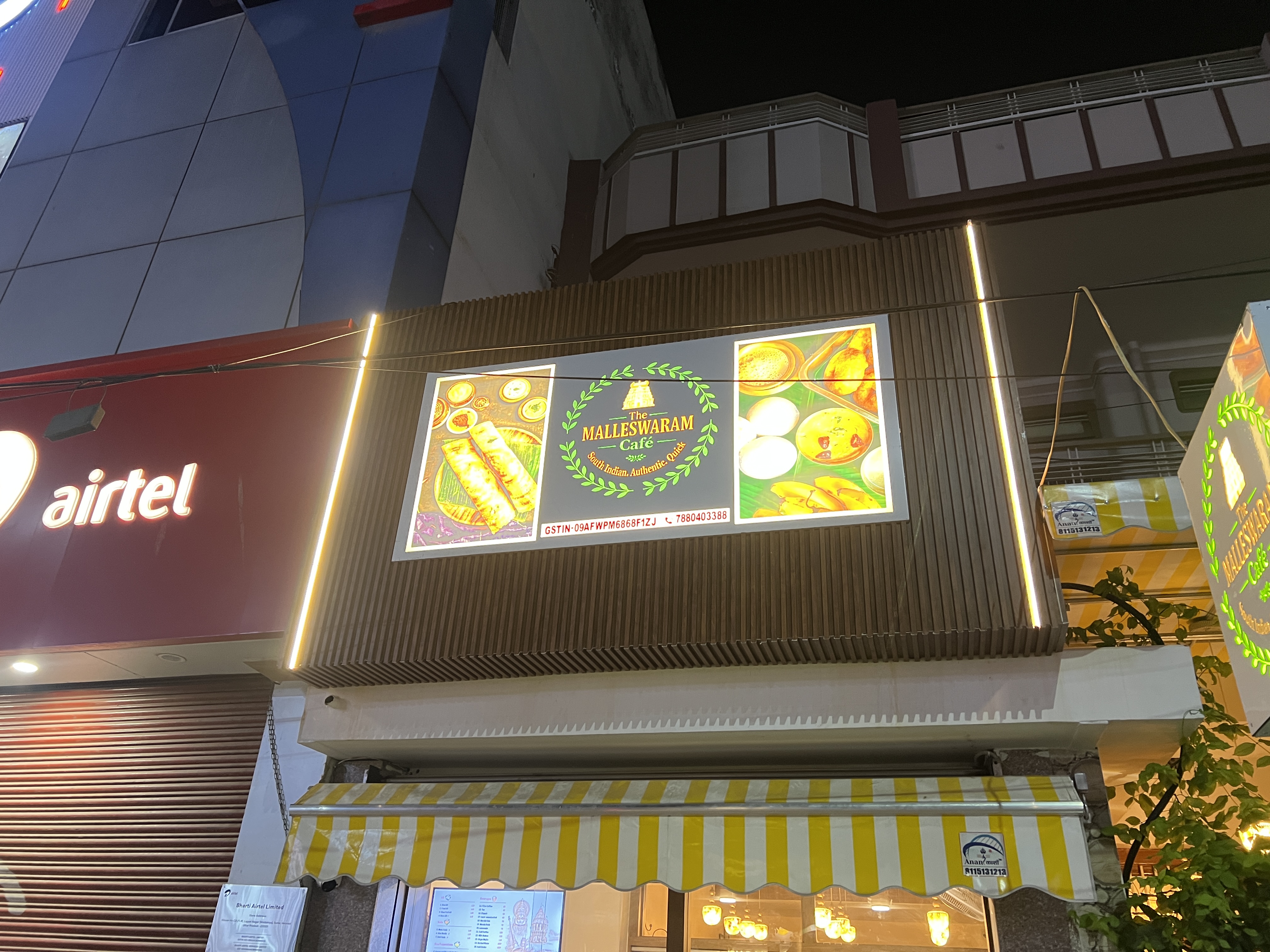
The Malleswaram Cafe is located in an approximately 80-year-old family home in Lajpat Nagar, Varanasi. The house was built by the entrepreneur's maternal grandfather and remained the family home for several decades. Her maternal grandparents lived there throughout their lives, and the house became an important part of the family's memories and identity.
Figure 1
For the entrepreneur, the property was also
connected to her childhood. Her mother had grown up in the house, and the
entrepreneur herself spent time there while growing up. The house therefore had
value beyond its financial worth. It represented a connection between different
generations of the family.
The house has the character of an older
haveli-style home, with large windows, wooden furniture and an open central
space that allows natural light and air into the building. The house extends
across three levels and traditionally had two kitchens, allowing the family to
use different parts of the house according to the season.
As the family increasingly lived outside
Varanasi, a question arose about what would happen to the property in the
future. Selling the house would have provided a straightforward financial
solution, but it would also have meant giving up a property that had
significant family meaning. The decision to develop a business in the house
therefore came partly from the desire to preserve the family connection to
the property while giving it a new purpose.
The idea of developing a café came from the family's discussion about how the property could be used without being sold. The entrepreneur's father, who had spent many years working in research publishing before becoming an entrepreneur himself, was also interested in creating a business that could provide a more regular source of income.
His personal connection with South India was another influence on the idea. Having grown up with South Indian cultural and food influences, he wanted to bring the experience of authentic South Indian food to Varanasi. The concept eventually developed into a café rather than a conventional restaurant.
The location also supported the idea. Lajpat
Nagar had traditionally been a residential area but had increasingly developed
commercial activity. The property was on a main road with regular movement of
local residents and visitors. There were also educational institutions and
other commercial establishments in the surrounding area. The family saw an
opportunity to create a café that could serve both local customers and visitors
to Varanasi.
The choice of South Indian food was also
connected to the nature of the local market. The family believed that there was
an opportunity for an affordable South Indian food outlet in the area. A
quick-service format was selected because visitors to Varanasi may have limited
time and therefore may prefer food that can be served relatively quickly.
The café was planned from the beginning as a quick-service
café. The name Malleswaram was chosen by the entrepreneur's father
and was inspired by his connection with Malleswaram in Bengaluru.
The development of the café involved the
entrepreneur and her parents, along with a consultant chef and other
professionals. The menu was developed through a combination of family
preferences, research and testing. The entrepreneur also carried out research
in Varanasi to understand the local market and compare prices with other South
Indian restaurants and cafés.
The family also worked on sourcing ingredients
and finding suitable suppliers. A number of supplies were arranged through
suppliers in Delhi and transported to Varanasi. Staff were recruited with
experience from other restaurants, while a consultant was involved in the
hiring process.
The process was not without difficulties.
Obtaining a gas connection was a major practical challenge, and the café
initially had to operate using cylinders. The connection process took several
months. Construction was also affected by local circumstances, including
restrictions during the month of Sawan. Obtaining approvals and completing
administrative requirements sometimes required repeated visits to government
offices and banks.
These experiences became part of the
entrepreneur's early exposure to the practical side of running a business. The
process showed that starting a business involved much more than developing an
idea. It required dealing with infrastructure, regulations, suppliers,
employees and many small operational decisions.
The transformation was intentionally limited
to the ground floor. Walls were modified to create a larger space
suitable for approximately 60 seats, but the family did not undertake a
complete transformation of the property.
The café retained many elements associated
with the original character of the house. Its environment includes wooden
elements, traditional objects, Tanjore paintings and other items connected with
the family's history. This helped create a setting that was different from a
newly constructed commercial café.
The physical environment consequently became
part of the café's identity. Customers were not only visiting the café for
food; many also responded positively to the architecture and the experience of
eating in an old family home.
The transformation can therefore be understood
as a balance between change and continuity. The ground floor had to
change sufficiently to function as a modern food-service space, but the family
also wanted the property to continue reflecting its history.
The Malleswaram Cafe opened on 20 April
2026. The opening was initially kept small, with friends and family invited
to the café. This allowed the family to begin the venture in a familiar
environment and receive early feedback.
The early period was a learning phase.
Customer numbers and daily billing varied as the café established itself. The
family gradually learned which menu items customers preferred, what operational
problems needed attention and how customers responded to the café's combination
of food and environment.
For the entrepreneur, this period marked an
important change in her relationship with the property. A place that had
previously been associated mainly with family and childhood was now also a
workplace and business responsibility. This transition forms an important part
of the case because it connects the transformation of the physical property
with the development of the entrepreneur herself.
The café was not created by simply taking an empty commercial property and opening a restaurant. It developed from an existing family asset with emotional value, a desire to preserve that asset, a perceived market opportunity, and an intention to involve the next generation in its future.
The Entrepreneurial Process Save
The development of The Malleswaram Cafe was a gradual process in which the original idea was converted into a functioning business. Although the decision to use the family property was taken within the family, the entrepreneur became involved from the beginning and gradually took on greater responsibility as the venture developed.
The first step was deciding how the family property could be used. The family did not want to sell the house because of its emotional and historical importance. At the same time, the family wanted to find a practical use for the property that could generate income.
The café emerged as a solution to both considerations. It would allow the family to retain the property while creating a business that could potentially provide a regular income. The entrepreneur's father was particularly interested in developing a food business because of his connection with South Indian food and his experience of growing up in South India.
From the beginning, the concept was intended to be a quick-service café. The family believed that South Indian food could work well in this format because many dishes could be prepared and served relatively quickly. This was considered particularly suitable for a city such as Varanasi, where many visitors have limited time between sightseeing and other activities.
The entrepreneur was involved in discussions about how the property could be used, how the café should look and how the business should be developed. This meant that her involvement began before the café actually opened.
The development stage required decisions about the physical space, menu, suppliers, staffing, branding and regulatory requirements.
The entrepreneur participated in designing the café and creating its visual identity, including the logo. She also worked on developing the café's social-media presence and contacted influencers to help introduce the café to potential customers.
The menu was developed by the entrepreneur, her parents and a consultant chef. The family wanted the food to have a home-cooked quality while still being suitable for a commercial kitchen. The entrepreneur also carried out research in Varanasi and compared other South Indian restaurants and cafés to understand their offerings and pricing.
Sourcing ingredients was another important part of the process. Suppliers were identified through personal contacts and through the consultant. A significant amount of the required supplies was sourced from Delhi and transported to Varanasi.
Staffing required another set of decisions. Chefs and other staff with restaurant experience were recruited, while a consultant assisted with hiring. The café also had a manager with previous experience in the hospitality industry. The family had to establish expectations around customer service and the standards expected from the staff.
Regulatory requirements such as GST and FSSAI registration were handled primarily by the entrepreneur's father, with the entrepreneur helping to understand the requirements and organize the necessary documentation.
The development of the café also demonstrated that turning an idea into a business involves dealing with practical problems that cannot always be anticipated at the planning stage.
One of the major challenges was obtaining a gas connection. In the beginning, the café had to rely on gas cylinders while waiting for the connection, which took approximately four months.
Construction was also affected by local circumstances. During Sawan, construction activity had to stop because of local religious sentiments. Administrative processes also took time, and dealing with banks and government offices often required repeated visits.
These experiences changed the entrepreneur's understanding of entrepreneurship. An idea could be exciting at the beginning, but actually implementing it required patience, persistence and the ability to deal with problems that were outside the entrepreneur's control.
The entrepreneur's role changed significantly after the café opened.
During the development stage, her responsibilities were mainly related to planning, design, research, branding and helping her father. Once the café became operational, however, she became responsible for many day-to-day decisions.
Her responsibilities included coordinating with staff, conducting briefings, helping with billing when the billing employee was unavailable, approving requirements, managing purchasing and payments, dealing with customer complaints and coordinating with social-media and delivery-platform teams.
The café also developed a system in which customers first completed their order slips before taking their seats. This was intended to reduce the possibility of orders being missed. The entrepreneur became involved in monitoring such processes and resolving problems when they occurred.
When the entrepreneur and her father were in different cities, they shared responsibility for the business. She would manage the café in Varanasi while keeping her father informed and taking his advice on important decisions.
This experience gave the entrepreneur responsibility that was different from simply helping with a family project. She had to make decisions that affected employees, customers, suppliers and the financial operation of the café.
One of the most important aspects of the entrepreneurial process was the change in the entrepreneur's understanding of leadership.
At the beginning, the entrepreneur saw the café partly as an extension of the family's legacy. As she became more involved in its operation, she began to understand that running a business required responsibility towards many different people.
Managing employees from different backgrounds required patience and respect. Customer complaints had to be taken seriously even when the entrepreneur believed that the business had provided a good product. Mistakes, such as a dosa not being prepared correctly, had to be addressed by listening to the customer and finding a suitable solution.
The experience also taught the entrepreneur that being responsible for a business meant that personal preferences could not always come first. Once responsibility had been accepted, the business required consistent attention regardless of other personal commitments.
The entrepreneur describes this as one of her most important lessons from the venture. Entrepreneurship was not simply about having an idea or being able to invest money in a business. It required dedication, humility, people management and the willingness to take responsibility for the consequences of decisions.
The development of The Malleswaram Cafe therefore created two outcomes at the same time. It created a new business using an existing family property, but it also created a practical learning environment for the entrepreneur.
Through the venture, the entrepreneur gained experience in areas such as market research, product development, branding, recruitment, operations, purchasing, customer service, financial decisions and investor communication.
The experience also changed her understanding of leadership. Coming from a family with a strong connection to the property, she had to learn to separate personal attachment from business decisions while still protecting the identity of the family space.
This makes entrepreneurial learning an important part of the case. The transformation was not only from house to café. It was also from family involvement to entrepreneurial responsibility.
Customer and Market Response
The opening of The Malleswaram Cafe provided an opportunity to test whether the idea developed by the family would work in practice. The initial concept was based on the belief that there was an opportunity for affordable South Indian food in Varanasi, particularly in a location that could serve both local residents and visitors. Customer response during the early months provided practical feedback on this idea.
Who Came to the Café?
The café attracted a mixture of tourists, local residents, students, families, friends and people living in the surrounding area. Tourists and local residents formed the largest groups, while students were another important customer segment.
The location contributed to this mix. The café is situated in Lajpat Nagar, an area that has developed from primarily residential use towards greater commercial activity. Its position on a main road gives it visibility to people travelling through the area, while nearby educational and commercial establishments provide access to local customers.
The café therefore did not depend on a single customer group. Its customer base developed from a combination of people looking specifically for South Indian food and people who were attracted by the location, appearance and atmosphere of the café.
What Attracted Customers?
Several factors appeared to contribute to customer interest.
The first was the availability of South Indian food. The family believed that South Indian food was relatively underrepresented in the immediate market, creating an opportunity for a specialized café.
The second was affordability. Customers frequently responded positively to the prices, particularly when compared with other cafés. Keeping the food accessible was therefore an important part of the café's value proposition.
The third was the physical setting. Customers were attracted not only by the food but also by the character of the old house. The wooden elements, traditional objects, Tanjore paintings and other details connected to the property created an environment that was different from a newly constructed café.
The café also incorporated details intended to strengthen the food experience. For example, some food is served on banana leaves, providing a more traditional South Indian experience while also reducing the use of conventional disposable serving materials.
Customer Feedback and Changes to the Menu
Customer feedback became an important part of the café's development. The entrepreneur and the family regularly interacted with customers and paid attention to their comments and suggestions.
Not every dish worked equally well. On occasions when a dosa was not prepared satisfactorily, the café replaced it rather than ignoring the complaint. This became part of the approach to customer service: complaints were treated as opportunities to understand what needed to improve.
One particularly useful example was the ragi dosa. Because the café prepared its food fresh and did not rely on ready-made food, the ragi dosa could take more than 30 minutes to prepare. This created delays for other orders. Rather than continuing to offer a dish that was affecting the overall service experience, the decision was made to remove it from the menu.
This was an important entrepreneurial lesson. A dish may appear attractive as part of a menu, but its commercial value also depends on whether it can be prepared efficiently without negatively affecting other customers.
Other dishes received particularly positive responses. Curry leaf dosa and moringa podi dosa became popular with customers. These responses helped the family understand which parts of the menu were most successful.
Building Customers Through Word of Mouth
The café's early marketing relied on a combination of online and offline approaches.
The entrepreneur worked with social-media teams and influencers to introduce the café to a wider audience. The visual character of the property made it particularly suitable for social-media content. Influencer videos and customer-generated content helped people discover the café.
Google also became an important way for potential customers to find the business. Newspaper flyers and direct conversations with customers provided additional forms of local promotion.
The café also benefited from word of mouth. Customers who enjoyed the food or the environment recommended it to others, and some customers returned with friends and family.
The café hosted kitty parties and birthday celebrations, which provided another indication that customers were beginning to see the space not simply as a place to eat but as a place where they could spend time together.
The Importance of Customer Interaction
One feature of the café's approach was the direct involvement of the owners with customers. The entrepreneur personally interacted with customers, listened to feedback and, where possible, allowed modifications to orders.
This was particularly important because the café was still developing its identity. Instead of assuming that the original concept was perfect, the family used customer responses to make adjustments.
This approach also helped the entrepreneur develop her understanding of customer service. She learned that running a business required listening even when feedback was difficult to hear. A customer complaint could not simply be treated as criticism; it could also provide information about what the business needed to change.
Early Market Acceptance
The overall customer response during the early period was positive. The café received good online reviews, attracted different customer groups and developed repeat customers. Its food, affordability and physical environment were recurring reasons for customer interest.
At the same time, the early experience showed that market acceptance was not simply a matter of having a unique idea. The business had to continuously respond to customers and make operational changes.
The case therefore suggests that identifying a market opportunity is only the beginning of entrepreneurship. The opportunity has to be tested through actual customer behaviour, and the business has to be willing to adapt when the original idea does not work exactly as expected.
In The Malleswaram Cafe, this process could be seen in relatively small decisions—such as changing dishes, responding to complaints, modifying orders and paying attention to which customers returned. These decisions gradually shaped the business after its opening.
Operational and Financial Performance
The first four months of The Malleswaram Cafe provide an opportunity to examine how the business developed after opening. While the café was still in its early stage, the operating information shows a gradual improvement in sales and a reduction in operating expenses
Early Operating Experience
Running the café required much more than serving food. The entrepreneur became involved in staff management, purchasing, billing, customer complaints, payments, ingredient requirements and other daily decisions.
The café operates with a team consisting of chefs, managers, billing and cleaning staff, along with the entrepreneur's involvement in management. Daily operations require coordination between the kitchen, service staff, billing and purchasing.
One practical system introduced at the café was the use of an order slip before customers took their seats. This helped reduce the possibility of orders being missed and made the ordering process easier to manage.
The entrepreneur also became responsible for checking requirements and approving purchases. This included monitoring ingredients and kitchen requirements and coordinating payments and transfers. These responsibilities provided practical experience in areas of business management that are difficult to understand fully through classroom learning alone.
Sales and Operating Expenses
The café's financial performance during its first four months shows a gradual improvement in the relationship between sales and operating expenses.
| ||||||||||||||||||
|---|---|---|---|---|---|---|---|---|---|---|---|---|---|---|---|---|---|---|
Gross sales increased from approximately ₹3.50 lakh in the first month to ₹4.95 lakh in the fourth month, an increase of approximately 41%. At the same time, operating expenses decreased from approximately ₹5.00 lakh to ₹4.50 lakh.
The result was a gradual narrowing of the gap between sales and operating expenses:
- Month 1: Sales were approximately ₹1.50 lakh below operating expenses.
- Month 2: The gap reduced to approximately ₹0.75 lakh.
- Month 3: The gap reduced further to approximately ₹0.10 lakh.
- Month 4: Sales exceeded the reported operating expenses by approximately ₹0.45 lakh.
This progression suggests that the café was moving towards greater operating sustainability during its first four months.
Table 2. Change in Sales and Operating Expenses
| Measure | Month 1 | Month 4 | Change |
|---|---|---|---|
| Gross Sales | ₹3.50 lakh | ₹4.95 lakh | +41.4% |
| Operating Expenses | ₹5.00 lakh | ₹4.50 lakh | −10.0% |
| Difference | −₹1.50 lakh | +₹0.45 lakh | Improved by ₹1.95 lakh |
The figures indicate an encouraging early trend. However, they should be interpreted as early-stage operating performance, rather than evidence of long-term profitability. The café had been operating for only a few months at the time of this study.
The café's average bill was approximately ₹250. On a typical weekday, around 48 bills were recorded, resulting in average daily billing of approximately ₹12,000.
Weekend business was stronger, with average weekend billing of approximately ₹24,000. This difference suggests that the café experienced stronger demand when customers had more leisure time to visit.
Individual customer numbers were not maintained because customers frequently arrived in families or groups. For this reason, billing transactions rather than individual customers provide a more consistent measure of daily activity.
The café's performance therefore depended not only on attracting new customers but also on serving groups, repeat visitors and customers who used the space for social occasions.
Initial Investment
The initial investment in establishing The Malleswaram Cafe was approximately ₹50 lakh. This included construction and modifications, kitchen equipment, furniture and interiors, licences, initial inventory and other costs associated with establishing the business.
The investment was entirely from the family. The business did not use loans or outside investment to establish the café.
This is important when considering the financial performance of the first four months. The improvement in operating performance does not mean that the original ₹50 lakh investment had already been recovered. Rather, the early financial results indicate that the café was moving towards covering its ongoing operating requirements.
Learning from the Numbers
The financial figures also contributed to the entrepreneur's understanding of business management.
Before becoming involved in the café, the entrepreneur could understand entrepreneurship as an idea or opportunity. Running the café demonstrated that a business also depends on controlling everyday expenses, monitoring sales, understanding customer spending and making decisions about staffing and purchasing.
The gradual improvement in sales provided encouragement, but it also demonstrated the importance of patience. A new business does not necessarily become financially successful immediately. The first months involved learning how to operate efficiently and how to increase customer demand while controlling costs.
The financial experience therefore complemented the entrepreneur's personal learning. She began to understand that entrepreneurship involves both vision and discipline: the vision to create something new and the discipline to monitor whether the business is actually working.
Early Sustainability
By the fourth month, the relationship between gross sales and operating expenses had improved substantially compared with the first month. This provides evidence of early operating sustainability.
However, the study does not use these figures to conclude that the café has achieved long-term commercial success. The business is still young, and factors such as tourism patterns, future customer demand, delivery operations, staffing costs and changes in expenses may affect its performance.
The more appropriate conclusion at this stage is that the café demonstrated a positive early operating trajectory. Sales increased while operating expenses declined, bringing the venture from an initial operating deficit towards a position where reported monthly sales exceeded operating expenses.
This early financial experience, together with customer response, provides an important basis for evaluating the original entrepreneurial decision to develop the family property into a café.
Entrepreneurial Learning and Personal Development
One of the most important outcomes of The Malleswaram Cafe has been the entrepreneur's own learning. The experience changed her understanding of what it means to start and run a business. Before becoming involved in the café, entrepreneurship could be understood mainly as having an idea and turning it into a business. Working on the café showed that entrepreneurship also involves responsibility, people management, decision-making and the ability to continue working through difficult situations.
From an Idea to Responsibility
The entrepreneur was involved with the café from its early stages, but her responsibilities increased considerably after the café opened. She had to deal with staff, customers, suppliers, bills, purchasing and everyday operational decisions.
This created a difference between being involved in a business and being responsible for a business. Once the café was operating, decisions could not simply be postponed because they were difficult or inconvenient. Problems had to be addressed because they affected real customers, employees and the functioning of the business.
This was one of the entrepreneur's biggest lessons: taking responsibility for a business means remaining committed even when the work is difficult.
Learning to Manage People
Managing people was another important part of the experience.
The café brought together people with different backgrounds, levels of experience and responsibilities. The entrepreneur had to learn how to communicate with staff respectfully while also making sure that work was completed properly.
This was particularly significant because the entrepreneur was young. Being in a position of authority could easily create a sense of being the "boss," but the experience taught her that leadership is not simply about having authority over other people.
Instead, effective leadership required listening, explaining expectations, solving problems and treating people with respect.
The entrepreneur came to understand that being responsible for people requires humility. A business owner cannot expect employees to work effectively simply because the owner has authority. People need to be managed with patience and understanding.
Learning from Customers
Customer interaction also changed the entrepreneur's perspective.
The café was created around an idea that the family believed would work, but customers ultimately determined how well the idea worked in practice. Customers sometimes complained about food or service, and the entrepreneur had to listen and decide how to respond.
For example, when a dosa was not prepared properly, the café replaced it. When the ragi dosa created long waiting times because of its preparation process, the item was removed from the menu.
These experiences showed that an entrepreneur cannot become too attached to an original idea. A business has to respond to what customers actually experience.
For the entrepreneur, this was also a personal lesson in humility. Coming from a family that owned the property, she had to learn that the café was not simply a family space. Once it became a business, customers had legitimate expectations about the food, service and experience they received.
Entrepreneurship as a Difficult Experience
The experience also changed the entrepreneur's understanding of entrepreneurship itself.
Starting a business was not always exciting or enjoyable. There were administrative difficulties, construction delays, staffing issues, customer complaints and financial pressures. Some situations were frustrating and required repeated effort before they could be resolved.
The entrepreneur therefore came to see entrepreneurship as a process that could be hard, demanding, and sometimes humbling.
This was different from the idea that entrepreneurship is mainly about having a creative idea or achieving success. The day-to-day reality involved many ordinary tasks and difficult decisions.
The experience reinforced the importance of dedication. Once responsibility had been accepted, the business could not simply be ignored when other activities became more attractive or convenient.
Developing Confidence and Decision-Making
The café also gave the entrepreneur greater confidence in making decisions independently.
She learned to make decisions about purchasing, customer complaints, staffing requirements and operational matters while also knowing when to seek advice from her father.
This balance was important. Her father remained an important source of experience and guidance, but the entrepreneur increasingly had to make decisions herself when she was managing the café in Varanasi.
This created an environment in which learning happened through doing. Instead of waiting until she had complete knowledge before making decisions, she learned by taking responsibility, observing the results and adjusting her approach.
Learning to Think Like an Entrepreneur
The startup pitching experience added another dimension to this learning.
The entrepreneur had the opportunity to present The Malleswaram Cafe to potential investors and explain its business model, market opportunity and future potential. Working with her father to prepare the pitch taught her how entrepreneurs communicate a business opportunity to people who may be considering investing in it.
The experience also helped her understand that entrepreneurship involves more than operating a business. An entrepreneur must be able to explain why the business exists, what problem or opportunity it addresses, how it creates value and how it can grow.
The positive response from potential investors gave the entrepreneur additional confidence that the business concept could be communicated as a meaningful commercial opportunity.
The Meaning of Legacy
The entrepreneur's learning cannot be separated from the family history of the property.
The café gave her a new relationship with a place that had previously been associated primarily with family memories. She was not simply operating a restaurant in an unfamiliar commercial location.
She was taking responsibility for a property that had belonged to her grandparents and had been part of her mother's and her own childhood.
This created both motivation and pressure.
The motivation came from the desire to preserve something valuable to the family. The pressure came from knowing that the property represented more than a business asset.
The experience therefore helped the entrepreneur understand that taking forward a family legacy does not necessarily mean keeping everything unchanged. It can also mean finding a new way for that legacy to remain relevant.
Overall Entrepreneurial Learning
The experience at The Malleswaram Cafe has therefore provided learning in several areas:
| Area of learning | Experience at the café |
|---|---|
| Responsibility | Taking ownership of everyday business decisions |
| People management | Working with employees from different backgrounds |
| Customer orientation | Listening to complaints and changing decisions when necessary |
| Decision-making | Making operational choices while taking advice when required |
| Adaptability | Changing menu and processes when they did not work effectively |
| Financial awareness | Understanding sales, expenses and operating sustainability |
| Leadership | Learning that authority must be balanced with humility |
| Entrepreneurial communication | Presenting the venture and its potential to investors |
| Legacy management | Finding a new purpose for an important family property |
The most important learning from the case is that entrepreneurship is not only about creating a business. It is also about becoming capable of taking responsibility for that business.
For the entrepreneur, The Malleswaram Cafe became a practical education in leadership, humility, decision-making and persistence. At the same time, it provided a way to carry a family legacy forward into a new generation.
Discussion
The case of The Malleswaram Cafe shows that transforming a family property into a business involved several processes at the same time. The physical transformation of the house, the creation of a new business, the response to customers and the development of the entrepreneur's own abilities were closely connected.
Preserving a Legacy Through a New Use
The first important finding is that the café provided a way of giving an old family property a new purpose without simply giving up the property.
The family could have chosen to sell the house, particularly because most of the family now lives outside Varanasi. Instead, the decision was made to use part of the property commercially while retaining its connection with the family.
This reflects the idea of adaptive reuse discussed in the literature. Adaptive reuse is not only about changing the physical use of a building. It can also involve maintaining aspects of its identity and social meaning while allowing it to serve a new purpose (Vafaie et al., 2023).
In this case, only the ground floor was adapted for the café. The architectural character of the house was still visible through its older features, furniture and family-related objects. The café therefore created a balance between the requirements of a modern business and the family's wish to retain the character of the property.
An Existing Asset Became an Entrepreneurial Opportunity
The second finding is that the family property itself became an important entrepreneurial resource.
The family already had access to a physical space with a particular location and character. Instead of beginning with the purchase or rental of a new commercial property, the family considered how an existing asset could be used to create a business.
Other resources were also important. The family contributed financial resources, knowledge and personal networks. The entrepreneur contributed her time, research, design and operational involvement. Suppliers, consultants, employees and professional contacts also became part of the process.
This demonstrates that entrepreneurship does not always begin with an entirely new resource or a completely new invention. Sometimes it involves seeing a new possibility in something that already exists.
Market Opportunity Had to Be Tested in Practice
The family initially identified an opportunity for affordable South Indian food in Varanasi. However, the existence of an opportunity could only really be tested after the café opened.
Customer response provided this test.
Customers included tourists, local residents, students and families. The café also attracted customers for social occasions such as birthday celebrations and kitty parties. Positive responses to particular dishes, the affordability of the food and the character of the property helped establish the café's identity.
At the same time, customer response also showed where the original idea needed to change. The ragi dosa is a useful example. Although it was part of the menu, its preparation time created operational problems. Removing it demonstrated that the business was willing to change its offering when the original approach did not work efficiently.
This supports the idea that entrepreneurship is an ongoing process rather than a single decision made before opening. The entrepreneur identifies an opportunity, tests it, receives feedback and adjusts the business.
Entrepreneurial Learning Through Direct Experience
The third major finding concerns the entrepreneur herself.
Family-business research has shown that exposure to family business environments can influence entrepreneurial intentions and capabilities. In this case, however, the entrepreneur's learning went beyond simply observing a family business. She became directly responsible for many aspects of the venture.
Her responsibilities included staff coordination, purchasing, billing, customer complaints, operational approvals, social-media coordination and other daily decisions.
This made the café a practical learning environment. The entrepreneur had to make decisions and then deal with the consequences of those decisions.
Her experience therefore supports the idea that entrepreneurial learning can occur through direct participation and responsibility. Formal education can provide concepts, but operating a real business introduces problems that cannot always be understood through theory alone.
Leadership and Humility
An important personal finding from the case is the entrepreneur's changing understanding of leadership.
At a young age, being responsible for employees could easily be interpreted as simply having authority. The experience at the café showed that leadership required something different.
Employees had different backgrounds and responsibilities, while customers had different expectations. The entrepreneur had to communicate clearly, listen to people and remain respectful while still making decisions.
This experience led to an important realization: authority does not automatically create good leadership. A young entrepreneur has to earn cooperation through responsible behaviour, communication and respect.
This became particularly important when dealing with customer complaints. Rather than assuming that the business was always right, the entrepreneur learned to listen and take corrective action where necessary.
The Importance of Adaptability
Another important finding is the role of adaptability.
Several examples from the case demonstrate this. The business had to deal with difficulties in obtaining infrastructure, changes in the construction process, staffing requirements and customer feedback. The menu also changed when an item affected service efficiency.
These experiences show that the original business plan was only the starting point. The actual business developed through repeated decisions and adjustments.
This is consistent with entrepreneurship research that emphasizes resourcefulness and the ability to respond to constraints. Yu and Wang (2021), for example, find that entrepreneurial bricolage and the use of alternative resources can support the development of capabilities in new ventures.
In the Malleswaram case, adaptability was not a theoretical concept. It was part of everyday business management.
Financial Performance and Early Viability
The financial results provide another perspective on the case.
During the first four months, gross monthly sales increased from approximately ₹3.50 lakh to ₹4.95 lakh, while operating expenses decreased from approximately ₹5.00 lakh to ₹4.50 lakh. This improvement brought the business from an initial operating deficit towards a position where reported sales exceeded operating expenses.
These results provide evidence of early operating viability, although they cannot establish long-term success because the business is still young.
The results are particularly meaningful when considered alongside customer response. The café was not only attracting customers; it was also improving its ability to cover its ongoing operating costs.
Investor Communication as Entrepreneurial Learning
The startup pitching experience adds another dimension to the case.
Preparing and presenting the café to potential investors required the entrepreneur to think about the business differently from the way she thought about it as an operator. She had to understand and communicate the market opportunity, business model, financial potential and possibilities for growth.
Working with her father to develop the investor presentation also gave her an opportunity to learn how entrepreneurs present a business to people who may invest in it.
The interest received from potential investors provided an additional form of external encouragement for the business concept. More importantly for this case study, the experience demonstrated that entrepreneurship involves both building a business and being able to communicate its value to others.
The Two Transformations
Taken together, the findings show two transformations taking place simultaneously.
The first was the transformation of the family property:
Family home → adapted commercial space → functioning café
The second was the transformation of the entrepreneur's role:
Family member involved in planning → active participant → responsible young entrepreneur
These two transformations were connected. The importance of the property gave the entrepreneur a strong personal reason to become involved, while the business gave her an opportunity to learn how to carry the family legacy forward in a new form.
The case therefore suggests that family legacy does not necessarily have to mean preserving an asset exactly as it was. In some situations, preserving a legacy may mean finding a new use for it while retaining the elements that give it meaning.
Overall Interpretation
The Malleswaram Cafe demonstrates how entrepreneurship can emerge from the combination of family resources, personal motivation, market opportunity and practical learning.
The case does not suggest that every old family property should be turned into a business, or that every young person involved in a family venture will become an entrepreneur. Instead, it shows how, in this particular case, a family decision about an old property created an opportunity for a new business and simultaneously became a practical education for the next generation.
The most significant outcome may therefore not be measured only by the café's sales. The venture has also created a new relationship between the entrepreneur, her family legacy and entrepreneurship itself.
Limitations
This study has several limitations that should be considered when interpreting its findings.
First, the study examines one business in one location. The experience of The Malleswaram Cafe cannot therefore be assumed to represent all cafés, family businesses or young entrepreneurs.
Second, the café is a relatively new venture. The financial analysis covers its early operating period and therefore provides information about initial performance rather than long-term business success. Customer preferences, costs and revenue may change as the business develops.
Third, the researcher was directly involved in establishing and operating the café. This provided valuable first-hand information, but it also means that some observations are based on personal experience and may contain personal bias.
Fourth, customer feedback was collected through normal interactions, customer conversations, online reviews and business experience rather than through a large, formally structured customer survey. The findings about customer preferences should therefore be understood as observations from the case rather than statistically representative results.
Finally, the study focuses primarily on the early development of the venture. A longer study following the café over several years could provide a stronger understanding of its long-term financial performance, customer retention, expansion and the entrepreneur's continuing role.
These limitations do not reduce the value of the case. Instead, they define what the study can reasonably conclude: it provides an in-depth account of the early transformation of one family property into a business and the entrepreneurial learning that took place during that process.
Conclusion
This case study examined how a young entrepreneur and her family transformed an approximately 80-year-old family home in Varanasi into The Malleswaram Cafe while attempting to preserve the property's family identity and develop a viable modern business.
The case shows that the transformation was not only physical. The ground floor of the house was adapted to create a 60-seat café, but important elements of the character and history of the home were retained. This allowed the property to acquire a new commercial purpose while continuing to represent a connection between generations of the family.
The development of the café also demonstrates how an entrepreneurial opportunity can emerge from an existing family resource. Instead of selling the property, the family explored how it could be used to create a business. The choice of South Indian food, the quick-service format, the location and the emphasis on affordability were developed in response to the family's experience and their understanding of the local market.
The early operation of the café provided an opportunity to test these decisions. The café attracted tourists, local residents, students and families, and customers responded positively to its food, affordability and physical environment. At the same time, customer feedback led to changes in the business. The removal of the ragi dosa because of its long preparation time is one example of how the café adapted its original offering based on practical experience.
The financial information also shows a positive early trend. Monthly gross sales increased from approximately ₹3.50 lakh in the first month to ₹4.95 lakh in the fourth month, while operating expenses decreased from approximately ₹5.00 lakh to ₹4.50 lakh. These figures suggest improving early operating sustainability, although the café is too young for the study to draw conclusions about its long-term profitability.
For the entrepreneur, the most significant outcome was the opportunity to learn through direct responsibility. Her role developed from participating in planning and design to managing staff, dealing with customers, handling purchasing and operational requirements, supporting billing and coordinating different aspects of the business. Through these responsibilities, she developed a deeper understanding of leadership, decision-making and customer service.
Perhaps the most important personal learning was the importance of humility and responsibility. Running a business required the entrepreneur to work with people from different backgrounds, listen to customers, accept criticism and continue working through difficult situations. The experience challenged the idea that leadership is simply about having authority. Instead, it showed that effective leadership requires respect, patience and accountability.
The startup pitching experience added another dimension to this learning. Presenting the café to potential investors required the entrepreneur to understand the business not only as an operating café but also as an entrepreneurial opportunity with a business model and potential for growth. This helped develop her ability to communicate the value of a business to others.
Overall, the case answers the research question by showing that transforming a family legacy property into a modern venture involves more than changing its physical use. It requires recognizing the value of existing resources, identifying a market opportunity, adapting to customers, managing people and learning to take responsibility for the business.
The Malleswaram Cafe therefore represents two connected journeys: the transformation of a family home into an entrepreneurial venture and the transformation of a young family member into a more confident and responsible entrepreneur. The case suggests that a family legacy can be preserved not only by keeping a property unchanged, but also by finding a meaningful new purpose for it and carrying that purpose into the next generation.
References/Inspiration
- Mikhailova, T., et al. (2024). Family business exposure and succession intention: The role of entrepreneurial self-efficacy and business performance. Journal of Small Business & Entrepreneurship, 37(5), 778–807. https://doi.org/10.1080/08276331.2024.2421683
- Porfírio, J. A., Felício, J. A., & Carrilho, T. (2020). Family business succession: Analysis of the drivers of success based on entrepreneurship theory. Journal of Business Research, 115, 250–257. https://doi.org/10.1016/j.jbusres.2019.11.054
- Vafaie, F., Remøy, H., & Gruis, V. (2023). Adaptive reuse of heritage buildings: A systematic literature review of success factors. Habitat International, 142, 102926. https://doi.org/10.1016/j.habitatint.2023.102926
- Yu, X., & Wang, X. (2021). The effects of entrepreneurial bricolage and alternative resources on new venture capabilities: Evidence from China. Journal of Business Research, 137, 527–537. https://doi.org/10.1016/j.jbusres.2021.08.063

No comments yet.